DEATCHEN

Digital workers for cybersecurity

Do you need a new specialist or an automated process?

Deutsche Cyberkom and MR.KNOW automate tasks around NIS-2, DORA and critical infrastructure: from daily routine to active defence that responds to security incidents immediately according to your rules. AI agents can be integrated in a controlled way. Upload a job description to find out which tasks can be automated and whether a digital worker is the right alternative to a new hire.

  • 🔒 GDPR-compliant
  • 🇪🇺 Made in Europe
  • 🛡️ NIS-2 · DORA · KRITIS
  • 🧠 AI Orchestration

In minutes · free

AI analysis Your preview Demo access
1 Input
2 Potential & ROI
3 Preview & demo
How it works

What is a digital worker?

In short: an automated process that takes over the tasks of a role, from routine work to immediate response to security incidents, with AI if desired. This is the profile of a digital worker for cybersecurity.

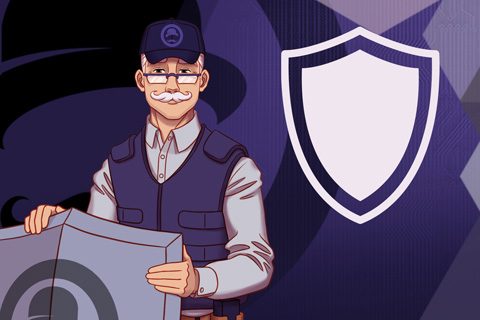
Comic figure of the Security Assistant: MR.KNOW digital worker for information security

Profile: Security Assistant

  • Field: information security and compliance.
  • Tasks: NIS-2 incident reporting, ISMS upkeep, supplier assessment, response to XDR alerts.
  • Working hours: around the clock, including nights and weekends.
  • Way of working: process modelled in BPMN 2.0, AI agents as building blocks.
  • Decisions: according to your rules, with approval and escalation to your team.

A digital worker is neither a person nor a chatbot. It is an automated process that takes over the tasks of a role: checking data, monitoring deadlines, preparing reports, controlling systems. It does not just work through routines, it also acts proactively: when an XDR alert comes in, it can immediately lock a compromised account, for example. What it does is modelled in advance as a BPMN 2.0 process, so every step is traceable and verifiable.

AI agents can be integrated as building blocks: they assess alerts, read unstructured data such as supplier responses and draft reports. The process defines what an agent may do and where a person approves. In this way the digital worker also supports the EU AI Act requirements for human oversight and documentation.

For your team this means: routine work and response run around the clock, and your experts take care of the cases that need experience and judgement. The digital worker submits decisions with far-reaching consequences to those responsible for approval.

Three levels

  • Digital Assistant: rule-based in BPMN 2.0, for example for reporting deadlines and policies.
  • Digital Agent: AI-powered, also understands unstructured data such as alert texts or supplier responses.
  • Digital Worker: orchestrates AI agents and systems across departments, for example in Active Protection.

Start your free potential analysis

From job ad to digital worker

In 5 steps to your digital colleague.

  1. Upload

    Upload a job ad or paste a URL.

  2. Analysis & preview

    AI checks tasks, workflows and automation potential – including a BPMN preview.

  3. Configure

    Digital worker as Assistant, Agent or Worker.

  4. Deploy

    Seamless integration into XDR, SIEM, ISMS and directory services – cloud or on-premise.

  5. Monitoring & optimisation

    Monitoring, governance and ongoing optimisation.

Why digital workers for cybersecurity?

NIS-2, DORA and critical infrastructure rules make cybersecurity a duty of top management: risk management, reporting deadlines starting at 24 hours, complete evidence and control of the supply chain. At the same time, skilled staff are scarce, and attackers use AI for convincing phishing emails and cloned voices. Digital workers take over the routine, respond to incidents immediately and integrate AI in a controlled way, so that your team can focus on the real risks.

up to 62 %

of security tasks automatable

24 h · 72 h

NIS-2 deadlines under control

24/7

Response to security incidents

NIS-2 incident reporting

Since 6 December 2025, Germany's NIS-2 Implementation Act has applied to around 30,000 companies. Significant security incidents go to the BSI in stages: early warning within 24 hours, notification within 72 hours, final report within one month.

The digital worker detects reportable incidents, starts the deadlines, collects the details, drafts the reports and submits them to those responsible for approval. Every report is fully documented.

ISMS, risks and audits

Policies, risk assessments and controls under ISO/IEC 27001 or BSI IT-Grundschutz depend on regular upkeep. In day-to-day business, that is exactly what gets left behind.

The digital worker distributes policies and collects acknowledgements, schedules reviews and internal controls, tracks measures with deadlines and compiles audit-proof evidence for the next audit. Management can thus prove that it oversees its duties.

DORA in financial services

Since 17 January 2025, DORA has required banks, insurers, investment firms and payment institutions to have ICT risk management, report major ICT incidents, run resilience tests and control their ICT service providers.

The digital worker classifies incidents according to the DORA criteria, maintains the register of information on providers, plans tests and exercises and prepares reports to the supervisor on time.

Supply chain in view

More than half of all data breaches can be traced back to suppliers and partners. Questionnaires sent once a year and spreadsheets are not enough, and NIS-2 explicitly requires supply chain security.

The digital worker embeds supplier assessment in procurement, sends questionnaires, follows up automatically, evaluates continuous risk scans and raises an alert as soon as a supplier deteriorates. Management receives measurable results instead of gut feeling.

Emergency and crisis

Operators of critical infrastructure in energy, water, health or transport must prove their resilience, and under the German KRITIS umbrella act also for physical protection. In an emergency, everyone has to know what to do.

The digital worker raises the alarm according to the emergency plan, informs the crisis team, staff and service providers via secure channels, logs every decision and organises regular emergency exercises including evaluation.

Awareness and access

Phishing, social engineering and AI-faked calls from managers target people, not firewalls. At the same time, access rights keep growing when nobody reviews them regularly.

The digital worker assigns awareness training, sends reminders and documents participation, including the training duty of management under NIS-2. When people join, move or leave, it triggers the rights adjustment and organises the recertification of access rights.

More about the matching digital workers: Security Assistant and Risk Assistant.

Active Protection: from XDR alert to response in seconds

XDR solutions such as SentinelOne detect attacks reliably. But who responds at three in the morning or at the weekend? With the Security Assistant, every detection becomes a governed process: the XDR event triggers a BPM rule, and a workflow responds immediately, traceably and exactly as you specify. Your existing security systems stay in place and are extended.

  1. XDR event

    SentinelOne or another XDR or SIEM system reports a threat.

  2. Assess

    An AI agent adds context: affected device, account, criticality.

  3. BPM rule

    The modelled rule decides by severity what happens and who approves.

  4. Respond

    Lock the account, disconnect the network adapter, shut down the switch port.

  5. Notify & prove

    Notification, ticket, reporting deadline and a complete log.

Typical automatic responses

  • Deactivate account: lock compromised user or service accounts in the directory service immediately.
  • Shut down network adapter: isolate an infected endpoint from the network before ransomware spreads.
  • Shut down switch: disconnect the affected switch port or network segment.
  • Notify: email, text message or Teams to IT management, on-call staff and service providers, with escalation if nobody responds.
  • Provide evidence: log the incident, open a ticket and start the NIS-2 reporting deadline if required.

If you wish, critical steps require human approval. Which response applies at which severity is defined in the process model.

AI agents orchestrated under the EU AI Act

AI agents assess alerts, summarise incidents and draft reports. In a digital worker they are one building block, not the whole: the BPMN 2.0 process defines which agent works with which data and when, where a human approves and when to escalate.

  • Agents orchestrated: clear task, fixed data access, defined handover.
  • AI under control: prompts in a vault, interchangeable models, approvals by those responsible.
  • Operated lawfully: supports the GDPR and the EU AI Act (Regulation (EU) 2024/1689) with human oversight, transparency and documentation.

About Deutsche Cyberkom

Deutsche Cyberkom GmbH protects companies against cyber attacks and AI threats, with cybersecurity and communication holistically from a single source. Formed from the brands TKUC and TheUnified, the ISO 27001-certified team serves more than 250 companies from Haibach, Cologne, Frankfurt am Main, Stuttgart and Bergisch Gladbach.

The portfolio ranges from IT security audits with vulnerability analysis through NIS-2 and DORA consulting to network and cloud security, security awareness training and secure emergency communication. For NIS-2, Cyberkom first clarifies whether a company is affected and then assesses its status in a gap analysis with more than 150 checkpoints. In the event of an attack, the emergency support team helps quickly.

Together with MR.KNOW, security concepts become everyday practice: digital workers implement reporting channels, controls and responses permanently and verifiably.

Learn more (in German) …

  • IT security & audit Security concepts, vulnerability analyses and concrete recommendations.
  • Consulting & compliance NIS-2 applicability, gap analysis and implementation, DORA compliance for financial companies.
  • Network & cloud security Protecting the infrastructure against intruders and detecting attacks early.
  • Security awareness Training and phishing simulations so that employees recognise attacks.
  • Communication & emergency Secure internal and external communication, emergency communication and fast help with incidents.

Frequently asked questions

The essentials on digital workers in IT security and the potential analysis.

What is a digital worker?

A digital worker is neither a chatbot nor a single script, but a modelled process: it recognises a situation, decides based on rules, executes, produces documents and escalates to a human where needed. MR.KNOW distinguishes three levels: Digital Assistant (rule-based on BPMN 2.0), Digital Agent (AI-powered, also handles unstructured data) and Digital Worker (autonomous AI orchestration across system boundaries).

What happens during the potential analysis?

You upload a job description or job ad as a PDF, provide a link to an existing job ad, or enter the text directly. Tasks, workflows and the achievable degree of automation are analysed; you receive the assessment by email, usually within a few minutes. The analysis is free and without obligation.

How long does the introduction take?

A phased approach has proven itself: a compact discovery workshop, from it a working pilot for one concrete use case, then the rollout to further sites or tenants. The first productive use case takes weeks rather than months, because it builds on a platform that already exists.

Do digital workers pay off?

The benefit is twofold: manual effort drops, and so do error rates and lead times. What decides the business case is reuse: most of the effort goes once into the base of data connectivity, extraction and the rule and document engine. Every further digital worker is largely configuration and therefore costs a fraction of the first one.

What about data protection and traceability?

Processes are documented and versioned, prompts are managed in a vault, and the AI models are interchangeable, so there is no vendor lock-in. Operation is GDPR-compliant and multi-tenant, either as a highly secure SaaS cloud or on-premise in your own data centre. Decisions therefore remain verifiable, which is an advantage in audited environments.

Do existing systems have to be replaced?

No. The BPMN 2.0 orchestration sits above your existing systems and integrates ERP, CRM, HR systems, specialist applications and security solutions such as XDR, SIEM or directory services via open standards, APIs and connectors instead of competing with them. That protects existing investments, regardless of how individual vendors evolve.

Do digital workers replace employees?

No. Digital workers take on the recurring routine share that ties up experienced staff, around the clock and without fluctuations in quality. They close gaps caused by the skills shortage rather than cutting jobs.

What is a digital worker for cybersecurity?

A digital worker for cybersecurity is a process modelled in BPMN 2.0 that takes over information security tasks, from routine work to active defence: detecting and reporting security incidents, responding immediately to XDR alerts, keeping track of policies, risks and suppliers and producing evidence for NIS-2, DORA and ISO 27001. It works around the clock, integrates the existing security systems and, if desired, AI agents and submits decisions with far-reaching consequences to those responsible for approval. Deutsche Cyberkom and MR.KNOW implement it together.

Which tasks does a digital worker take on in IT security?

The recurring work from NIS-2, DORA, critical infrastructure rules and ISO 27001: detecting reportable incidents and preparing the reports to the BSI on time (early warning within 24 hours, notification within 72 hours, final report within one month), maintaining policies and risk assessments, preparing internal controls and audits, assessing suppliers and following up, triggering emergency plans and tracking awareness training and access reviews. With Active Protection it also responds proactively to XDR alerts, supported by AI agents if desired. Decisions and approvals remain with those responsible.

What is Active Protection?

Active Protection connects an existing XDR solution such as SentinelOne with the MR.KNOW Security Assistant. An XDR event triggers a BPM rule, and a workflow responds automatically: for example, it deactivates a compromised account, shuts down the network adapter of an infected device or a switch port and sends notifications. Critical steps can require approval, and every action is logged.

Why are individual AI agents not enough in IT security?

Individual AI agents handle sub-tasks, such as summarising an alert. But if an agent may lock accounts or take systems offline, it must be defined and provable which data it sees, who checks and approves its results and what is logged. The EU AI Act (Regulation (EU) 2024/1689) has applied in stages since February 2025 and, depending on the use case, requires AI literacy, transparency, human oversight and documentation; the GDPR applies in any case. In a digital worker, AI agents are therefore embedded in a documented BPMN 2.0 process: orchestrated, with approvals by those responsible, versioned and traceable.

What is Deutsche Cyberkom's role?

Deutsche Cyberkom GmbH from Haibach, Germany, is ISO 27001-certified and serves more than 250 companies from five locations in IT security, NIS-2 and DORA compliance, security awareness and communication. It contributes the security expertise, the audits and the implementation at the customer, MR.KNOW the no-code BPM platform, the digital workers and their operation. Technology and security know-how thus become a finished solution rather than another toolbox.

Ready for your potential analysis?

Get started